
Sex Offender Checks in Appling County
The GBI and Georgia Crime Information Center operate the public Georgia Sex Offender Registry. Filter it to Appling County for a county list, or use a name, city, ZIP, offender ID, or address search when the live interface supports that mode. The Appling County Sheriff registers and verifies local residents. No separate official Appling map or app was found, so the state registry is the public search channel and the sheriff is the local compliance contact.
GBI says the public registry updates daily. Sheriffs submit changed information within two business days. Those schedules do not mean every move appears at once. Read the profile's status and identifiers instead of relying only on the map marker.
Appling Sheriff's Registry Role
Appling registration questions go to the sheriff at 560 Barnes Street, Suite B, Baxley. Official hours, appointment rules, and fees were not posted in the research, so confirm them before visiting. GDC and the State Board of Pardons and Paroles enter initial records for people released or supervised, while GBI enters qualifying out-of-state moves.
A person moving out of Georgia must notify the last Georgia sheriff and register in the new jurisdiction within 72 hours after establishing residence. This local and state handoff helps explain why a very recent change can lag behind real life even though the public database updates each day.
How to Search the Georgia Sex Offender Registry
Open the official Georgia Sex Offender Registry. Choose a search mode that fits the question. A county filter surveys Appling County, while a name or offender ID targets one known person. Address and radius controls are better for nearby-location awareness. Search fields can change, so read the live labels before submitting.
- Open the registry and review its terms and search choices.
- Enter a name or offender ID, or filter by Appling County, city, ZIP, address, and radius.
- Compare the result's identifiers and location rather than matching on name alone.
- Open the full profile and read offense, status, address, and classification details.
| Field Label | Type | Required | Notes |
|---|---|---|---|
| Last name | Text | Mode-dependent | Spelling matters. |
| First name | Text | No | Narrows a name search. |
| Offender ID | Text | No | Use an exact registry identifier. |
| County | Dropdown | No | Choose Appling for the county list. |
| City or ZIP | Text or dropdown | No | Mailing city can differ from location. |
| Address and radius | Text and dropdown | Radius mode | Confirm current distance choices live. |
When an Appling Search Is Blank
A blank Appling County result does not support one simple conclusion. GBI notes that a misspelled name or wrong county can hide a record. A person may be deceased, newly registered but not yet submitted, not legally required to register, or have completed a qualifying First Offender sentence. Juveniles generally are not listed unless tried and convicted as adults.
Retry with fewer fields, check spelling, and search by address or county. If a known duty or location still appears wrong, contact the Appling Sheriff or GBI. Do not treat a missing photograph as proof that the registration itself is missing.
The official registry FAQ explains these gaps.
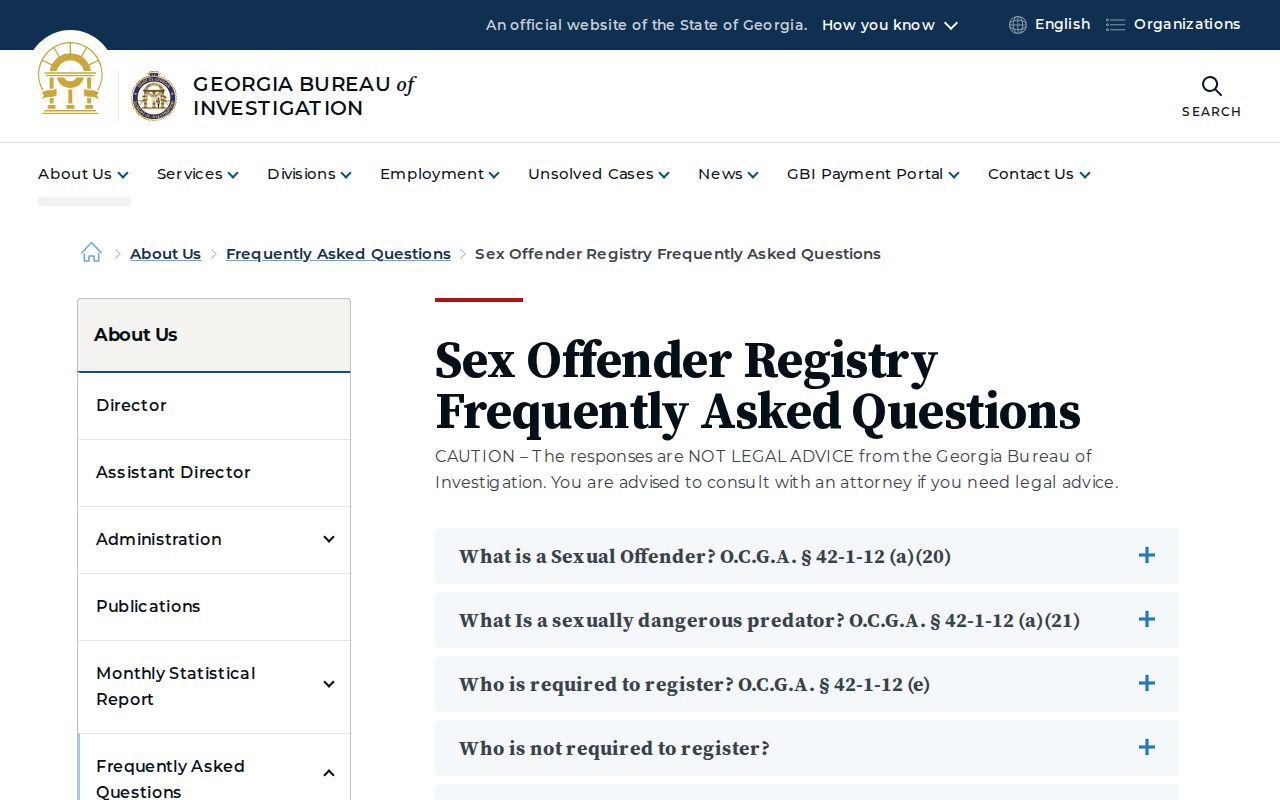
Its explanations provide a safer fallback than drawing conclusions from one query.
Inside an Appling Registry Profile
An official profile can combine identity, location, offense, and registration fields. It may display aliases, an identifying number, a photograph when available, physical traits, address, conviction jurisdiction and date, classification, and status. Vehicle or other lawful fields may also appear. Review the current live profile because the public schema can change.
| Name and Aliases | Known identity forms used to distinguish similar names. |
|---|---|
| Photo and Description | Photograph when available plus listed physical traits. |
| Registered Address | The address reported for registry purposes. |
| Offense | Qualifying offense and conviction jurisdiction or date when displayed. |
| Risk Classification | Level I, Level II, sexually dangerous predator, or not yet classified. |
| Registration Status | Public compliance or status information shown by the live system. |
NSOPW Beyond Appling County
The Appling filter is best for a Georgia county question. A search that crosses state lines needs the U.S. Department of Justice National Sex Offender Public Website. NSOPW queries participating jurisdictions, but it still depends on the source systems and can be affected by maintenance or participation gaps.
The official NSOPW search is the national layer.
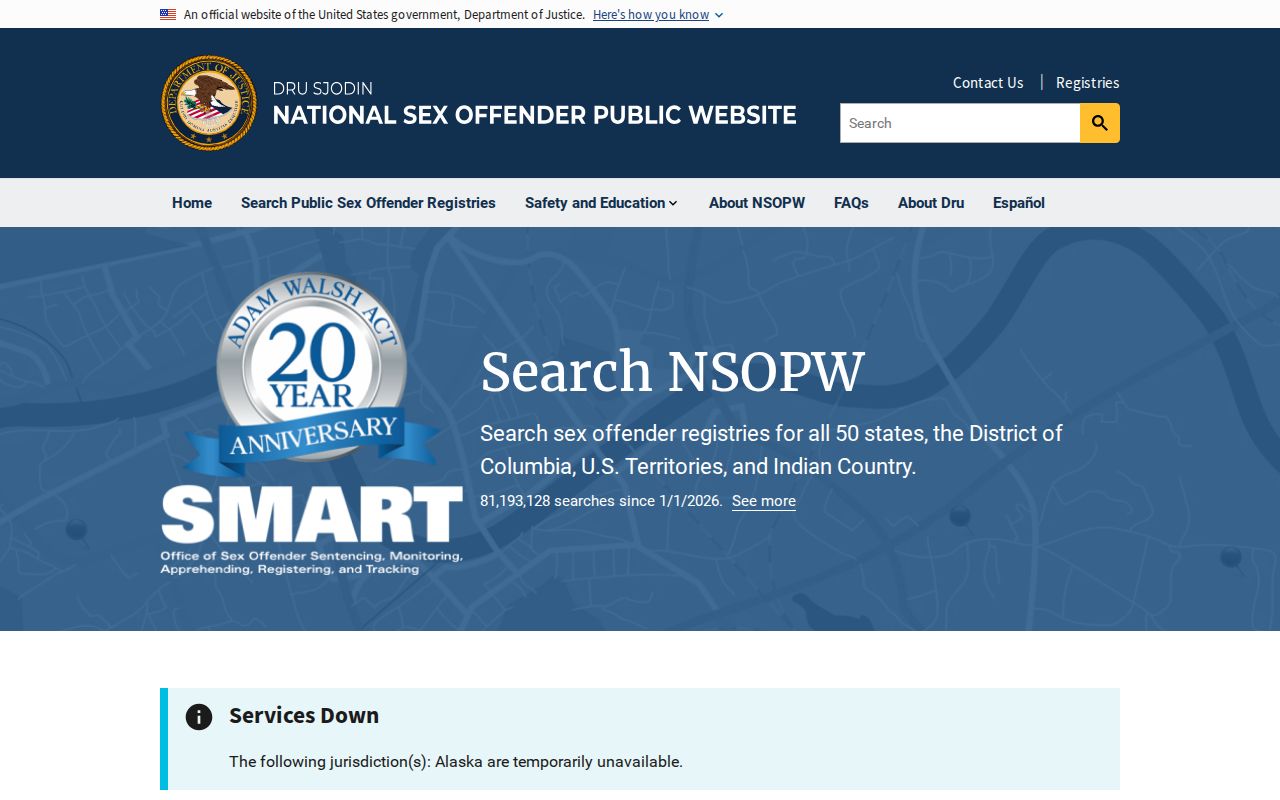
Use it to broaden geography, then verify Georgia details in the GBI profile and with the Appling Sheriff.
Georgia Registration Levels and Requirements
Georgia classifications are not the federal SORNA Tier I, II, and III duration system. The Sexual Offender Registration Review Board assesses risk for Level I, Level II, and sexually dangerous predator classifications. A person can also be not yet classified. Georgia's public guidance says registration is generally for life unless a court order or another legal route provides relief.
| Georgia classification | Meaning | Duration and public effect |
|---|---|---|
| Level I | Lower assessed risk relative to Level II | Generally public and lifetime unless legal relief applies |
| Level II | Higher board-assessed risk | Generally public and lifetime unless legal relief applies |
| Sexually dangerous predator | Board or court future-danger designation | Enhanced conditions and generally lifetime registration |
| Not yet classified | Assessment incomplete or not required under timing rules | Registration duty can still exist |
Appling's Date-Sensitive Distance Rules
Georgia law includes 1,000-foot restrictions for covered people and defined places, but they are date-sensitive and offense-sensitive. Do not turn that rule into a universal claim about every registrant or every location. The governing facts can depend on conviction date, status, and statutory definitions.
The official GBI classification source supplies current risk-classification context.
Classification and location restrictions answer different legal questions, so read each rule on its own terms.
Appling Community Notification and Lawful Use
Registry information supports personal, family, and community safety. It is not permission to confront a registrant. If a profile seems wrong or someone may be out of compliance, record the official profile details and contact the Appling Sheriff or GBI. Call 911 for an immediate threat. The public registry is not an emergency reporting system.
Use is limited by law: O.C.G.A. § 42-1-12 governs the public registry. Do not harass, threaten, trespass, intimidate, discriminate, or use registry data to commit a crime.
Report Appling Noncompliance Safely
Do not visit an address to test a registry entry. A map pin may be stale, and a confrontation can create danger. Save the official offender ID, profile URL or search details, the apparent mismatch, and the date observed. Give that information to law enforcement.
The official GBI registry landing page keeps the report tied to the state's current system.
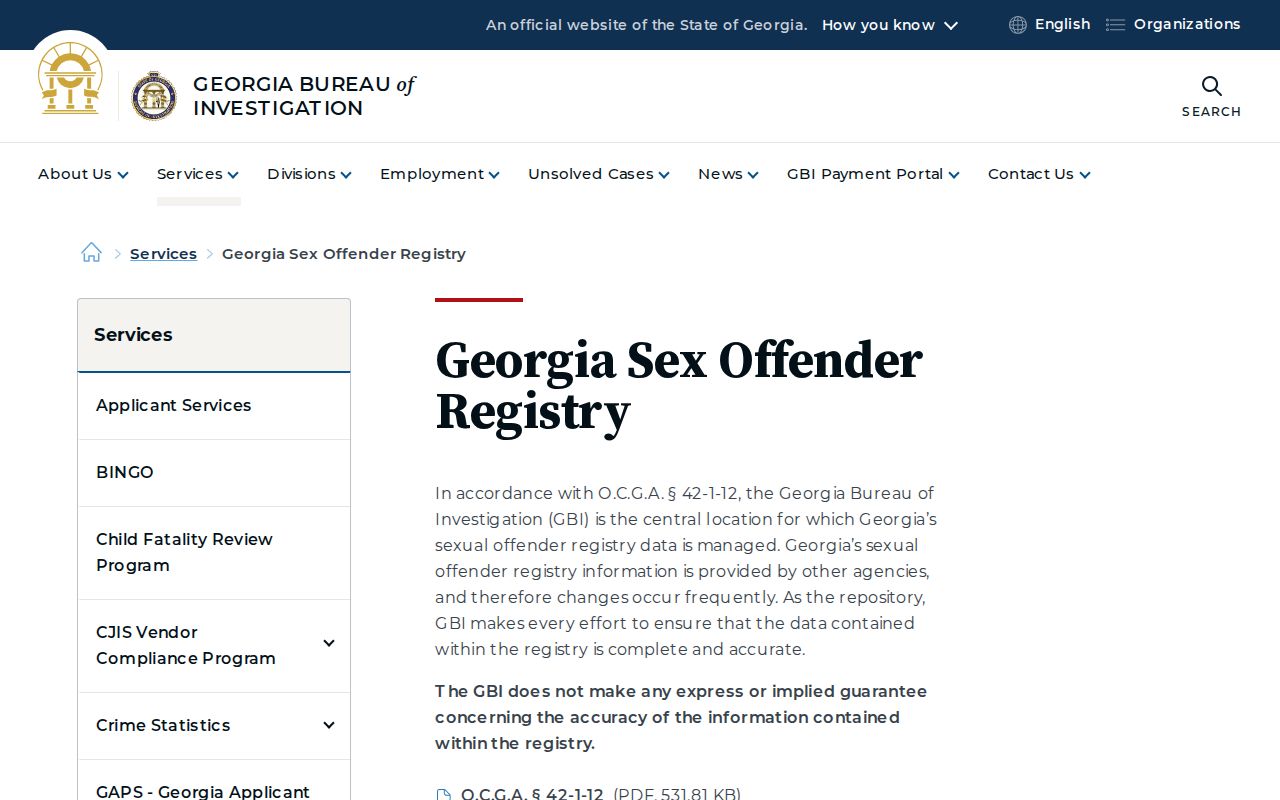
Appling's sheriff can address local verification, while GBI manages the statewide public record.
Keep the search date because registry content can change after verification or a reported move. A county filter and an address-radius search answer different questions. County mode gathers entries assigned to Appling, while proximity mode starts from a place. Mailing-city labels may not follow municipal borders, so a Baxley, Graham, or Surrency term can miss a nearby location. Search more than one way when safety planning depends on geographic coverage. The profile remains an official information source, not a prediction that a person will commit a future offense. Classification reflects Georgia's legal assessment system, and it should be read with the conviction and current registration status.