
Appling County Criminal Court Cases
Appling County criminal court cases are split by court power. Superior Court hears felony prosecutions. State Court handles most misdemeanors and county traffic cases. Magistrate Court issues warrants, conducts first appearances, and handles preliminary work. Baxley Municipal Court keeps ordinance and qualifying citation matters on its own track. A reader must identify the court before searching because Georgia does not merge all of these dockets into one government database.
The Appling County Clerk of Court maintains Superior and State Court files at 69 Tippins Street in Baxley. Call 912-367-8126 for copies, archived files, or a certified disposition. The Brunswick Judicial Circuit includes Appling, but its circuit office directs local calendar questions back to the clerk. The clerk's signed and certified record carries more weight than a screen view.
Appling Criminal Dockets by Court
A charge label alone does not tell a reader where the final file lives. Felony accusations may move from a Magistrate Court first appearance to indictment and an Appling Superior Court case. Most misdemeanor accusations proceed in State Court. A city ordinance or qualifying traffic citation can remain with Baxley Municipal Court.
- Accusation
- A formal charging paper commonly used for misdemeanor cases and some felony cases allowed by law.
- Indictment
- A grand jury's formal felony charge, which starts the trial-court phase for many serious cases.
- Case status
- An administrative label such as open or closed. Open means unresolved, not guilty.
Georgia Courts warns that no centralized traffic-citation database covers every city. A municipal citation may therefore require direct contact with the issuing court even when the county criminal search returns nothing.
Searching Appling County Case Records
The Georgia Courts E-Access directory lists Appling Superior and State Courts, then routes users to an account-based provider. The research identifies PeachCourt as that route. Access to an index does not promise that every image is online or free. Use a case number when known. A name search should be checked against the court, filing date, and charges before any conclusion is drawn.
- Open the state E-Access directory and choose Appling plus the correct Superior or State Court route.
- Sign in to the linked provider and search by case number, or use the exact party name.
- Compare the filing date, court, case type, and charge to separate similar names.
- Open the docket and locate the outcome for every count, not just the first charge.
- Ask the Appling clerk for the needed image, judgment, or certified final disposition.
| Field Label | Type | Required | Notes |
|---|---|---|---|
| County and court | Selection | Yes | Choose Appling and Superior or State Court. |
| Case number | Text | No | The strongest route when the full number is known. |
| Party name | Text | No | Use the exact name, then verify other case details. |
| Filing date | Date/index field | No | Helps distinguish people and related cases. |
| Case type or status | Index field | No | Confirm on the live provider because fields can change. |
Appling's PeachCourt Account Gate
Mandatory e-filing and open public access are different ideas. The Georgia e-filing directory lists PeachCourt as mandatory for both Appling Superior and State Courts. That rule tells lawyers where to file. It does not make every filed image free to the public.
The provider can show an index while placing document images behind an account or purchase step. Older material may never have been scanned. If a docket entry names the exact order needed, take that title and date to the clerk. This keeps the request narrow and avoids paying for unrelated pages.
The manifest's official court e-access source shows the state routing layer.
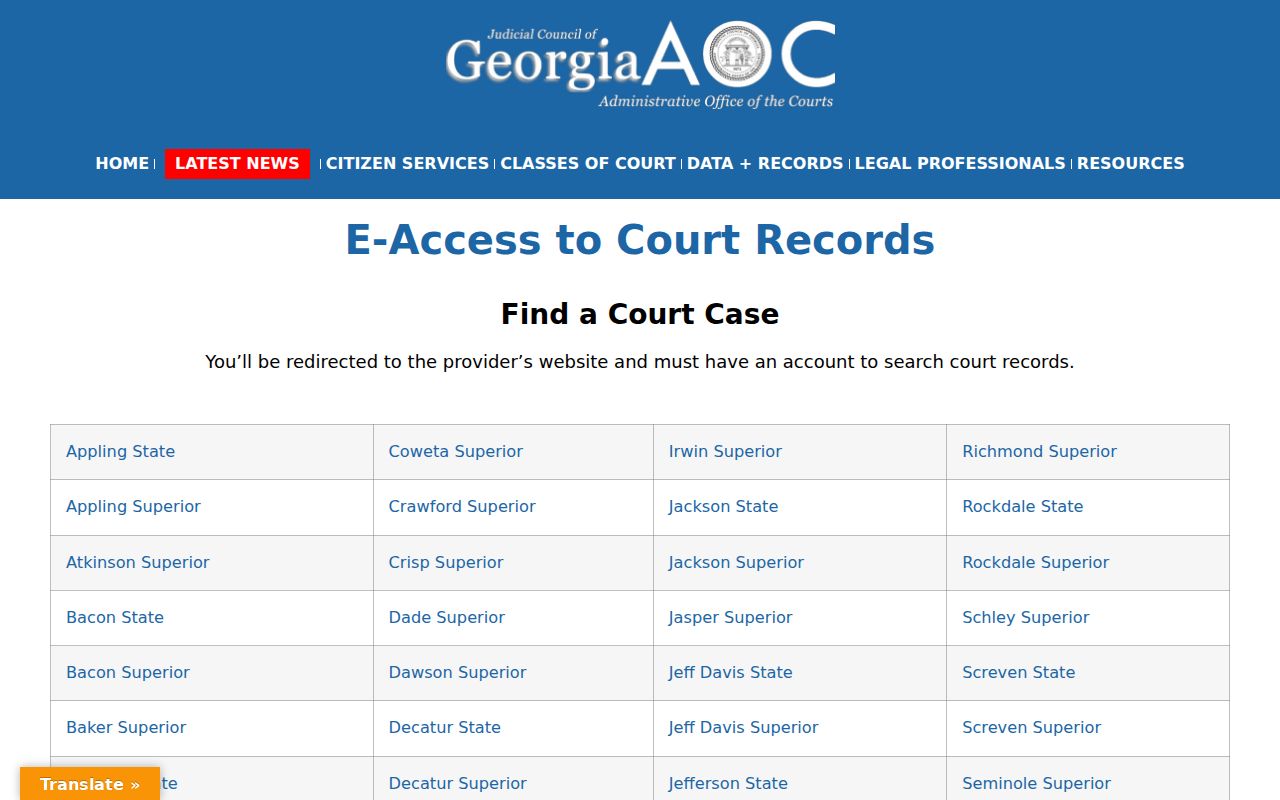
That screen is a doorway to the custodian and provider, not a complete state-owned docket.
Inside an Appling County Case File
An Appling County case file records what prosecutors filed and what the judge did. It can contain an accusation or indictment, motions, notices, hearing entries, pleas, verdicts, a judgment, and sentence terms. A statewide history is built around arrest cycles and reported outcomes, so it will not reproduce the full court docket. When the two sources differ, the certified court disposition is the best proof of the final result.
| Case Number and Court | Identifies the exact Appling docket and which clerk division holds it. |
|---|---|
| Charging Document | Shows the counts prosecutors chose to file, which may differ from arrest labels. |
| Docket Entries | Lists filed papers, motions, notices, and court events by date. |
| Hearing Dates | Tracks arraignment, motions, calendar calls, trial, and sentencing settings. |
| Disposition and Judgment | States the outcome for each count, including dismissal, plea, verdict, or other action. |
| Sentence and Conditions | Records confinement, probation, fines, and other terms ordered by the judge. |
Reading Appling Case Outcomes
One Appling criminal case can hold several counts, and each count needs its own result. A dismissal on one charge does not decide the rest. Likewise, an arrest label may be reduced or replaced in the accusation or indictment. Read across the full docket before treating a status as final.
- Nolle prosequi
- The prosecution discontinued that charge. It is not a conviction.
- Dead docket
- The court paused the case without entering a final conviction or dismissal.
- Dismissed
- The filed charge ended, but the earlier arrest may remain in other systems.
- Final disposition
- The count-level outcome reported by the court or prosecutor to GCIC.
If GCIC lacks an outcome, obtain a certified disposition from Appling's clerk and use it in the correction process. Missing data is not proof of guilt.
The official clerk contact page illustrates the local counter route.
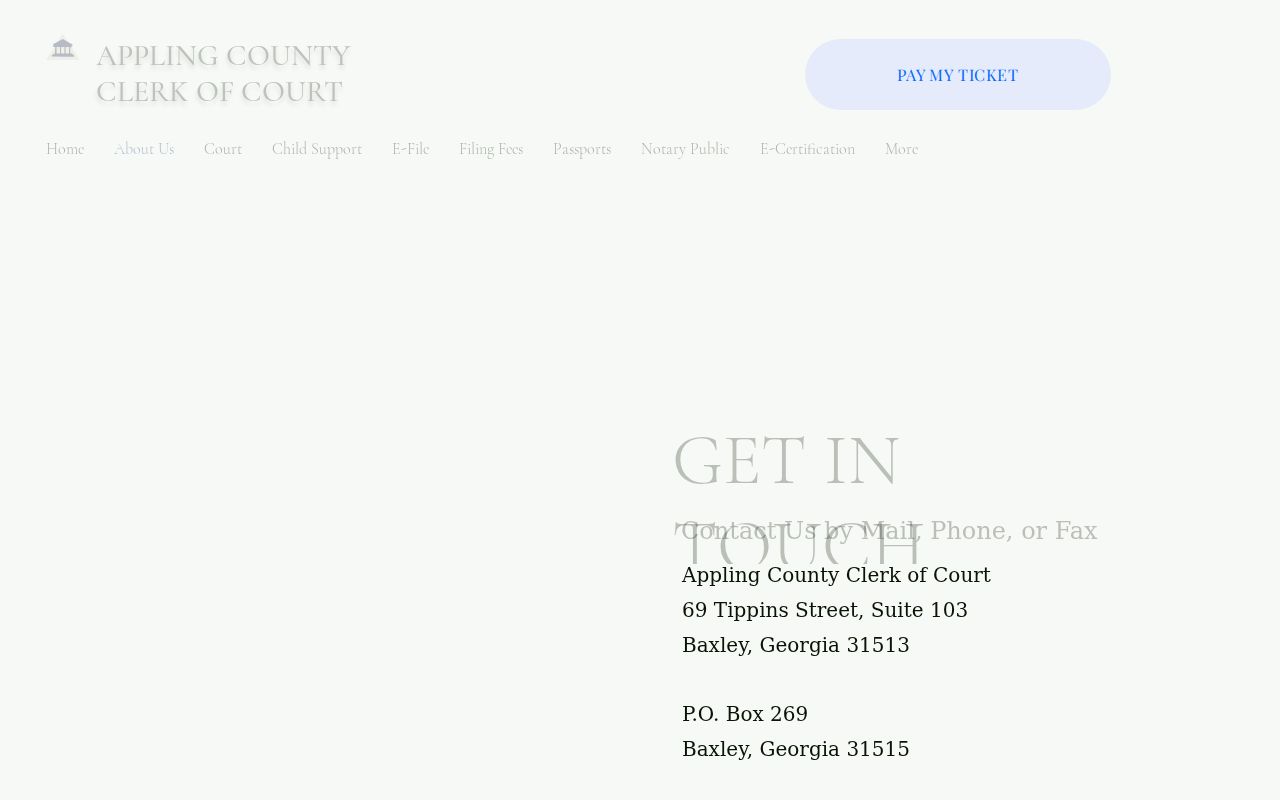
The contact source helps readers move from a provider index to an authoritative copy request.
How an Appling Criminal Case Moves
An arrest or citation comes before the filed court case. A judicial officer handles first appearance and bond. Felony matters may pass through a preliminary hearing and grand jury before reaching an indictment in Superior Court. Misdemeanors often proceed by accusation in State Court. Arraignment records the plea. Discovery, motions, and calendar calls then lead toward dismissal, a negotiated plea, or trial. A conviction is followed by judgment and sentence. An appeal creates a separate appellate trail.
Case flow: Charges Filed › Arraignment › Pretrial › Plea or Trial › Disposition › Sentencing
The official clerk homepage is the local starting point for that chain.
It connects the public to the office that preserves each stage as filed papers and orders.
Older Appling Court Files
A blank provider result does not establish that no case exists. Historical Appling files may be indexed under an older name form, stored in an archive, or available only through a clerk-assisted search. Search spelling variants and use a known filing year or case number. Then ask the clerk whether the file predates remote image coverage.
The same limit applies to mandatory e-filing. Current electronic filing rules do not retroactively digitize all paper cases. Request the specific docket sheet or final order rather than asking the office to answer a legal question. Georgia open-records rules do not require an agency to create a new compilation, and courts also apply their own access and sealing rules.
The manifest's e-filing source documents Appling's current filing channel.
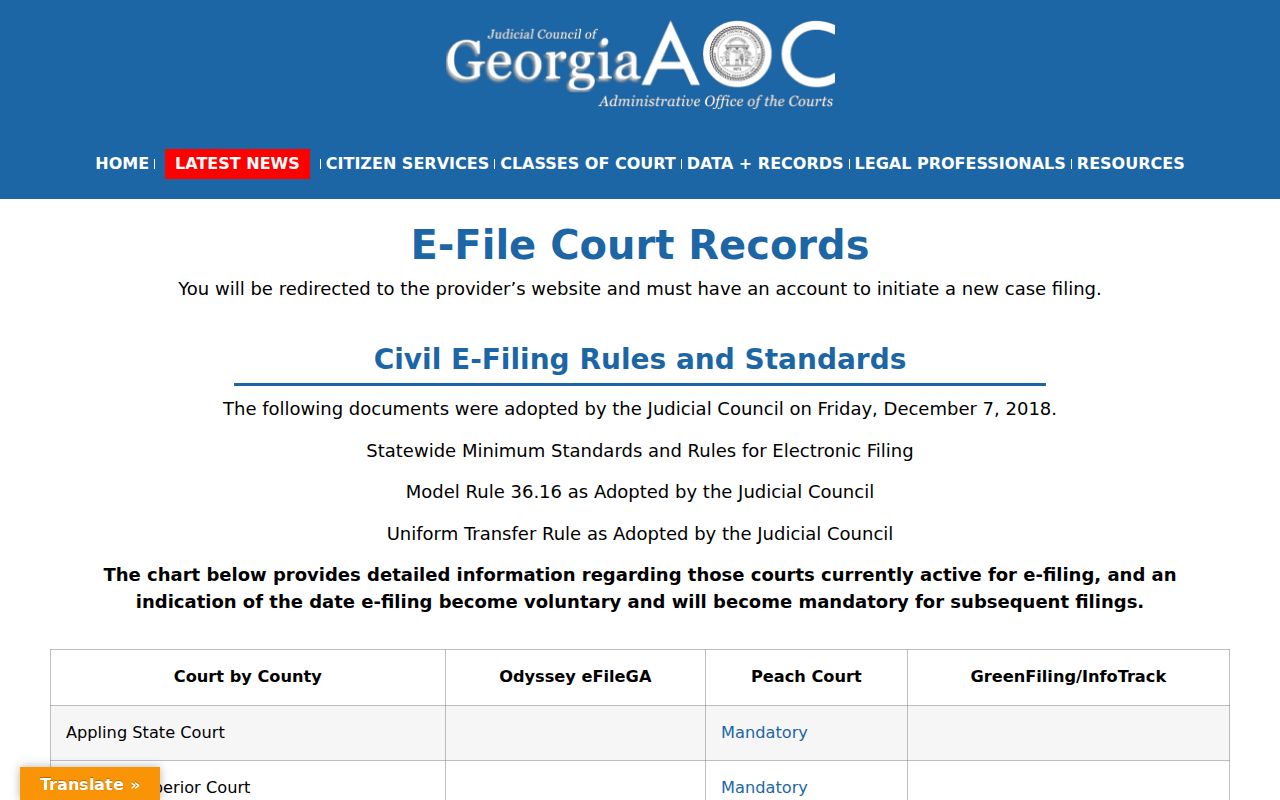
Its modern workflow should not be mistaken for the full depth of the clerk's archive.
Appling Case Record Access & Restrictions
Georgia law favors access to public records, but access is not absolute. Juvenile files, sealed records, protected victim and minor identities, Social Security numbers, medical details, and some pending law-enforcement material can be withheld or redacted. An online view may show less than the courthouse file. A sealing order can also remove material from ordinary public display.
Ask the Appling clerk whether a missing case is archived, sealed, or filed in another court. For an agency record request, O.C.G.A. §§ 50-18-70 through 50-18-72 govern response, costs, exemptions, and redaction. Court access also depends on judicial rules and case-specific orders. A requester should seek an existing document, such as a docket sheet or signed judgment, rather than ask the custodian to interpret it.
Federal Cases Beyond Appling Court
A federal prosecution tied to Appling County will not appear as a local Superior or State Court case. Appling lies in the U.S. District Court for the Southern District of Georgia. Federal docket access runs through PACER, which requires registration and may charge the current fee shown by the service.
The official PACER source shows that separate federal search layer.
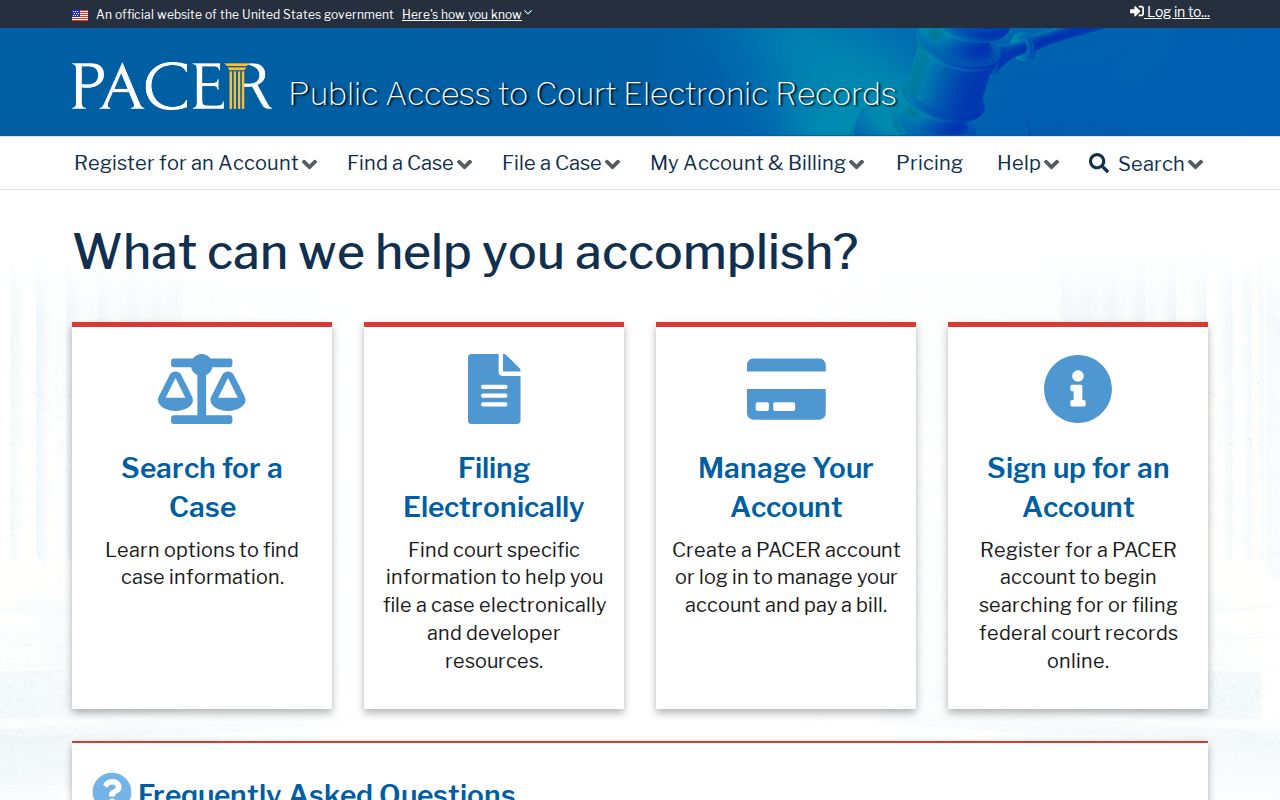
Use it only for federal dockets, while local charges remain with Appling's clerk and court provider.