
Checking Criminal History in Appling County
There is no single Appling County name search that combines police reports, bookings, every court filing, GCIC history, warrants, prison data, and registry information. Begin with the record type and then verify the outcome in the system that owns it. Gather the person's exact legal name, date of birth when lawfully available, spelling variants, approximate event date, arresting agency, and any case or report number before searching.
- Start with the filed case. Use Georgia Courts E-Access, choose Appling Superior Court for a felony or Appling State Court for most county misdemeanors, and continue to the account-based provider.
- Compare identifiers. Match the court, case number, filing date, charge, and available birth information rather than relying on a similar name alone.
- Check recent custody separately. Ask Appling County Jail about a county booking; use GDC Find an Offender only after a person enters state custody.
- Request the originating report. Contact the sheriff, Baxley Police, or Georgia State Patrol according to which agency created it.
- Get authoritative proof. Order a certified disposition from the clerk or review your own statewide history through GCIC when the result must be official.
The official Appling County government homepage provides a starting point for county services.

That county landing page is useful for confirming the government context before following a department-specific record route.
Appling's Three-Office Record Trail
A single event can create three locally distinct files. The investigating agency writes an incident or arrest report. Appling County Jail creates booking information when it accepts the person. The Clerk of Superior Court maintains the criminal case after prosecutors file it. The first two channels are centered at the sheriff and jail at 560 Barnes Street, Suite B, while Superior and State Court files are kept at 69 Tippins Street. Neither counter is a substitute for the other.
| Record needed | Appling channel | What it establishes |
|---|---|---|
| Incident or arrest report | Originating police or sheriff | What the officer alleged and documented |
| Booking or current county custody | Appling County Jail | Intake, custody, booking charge, and bond information |
| Filed charge and disposition | Appling County Clerk of Superior Court | What prosecutors filed and how the court resolved it |
| Georgia history | GBI/GCIC | Reported statewide arrest cycles and dispositions |
The county's official office directory illustrates that these functions sit in separate offices.
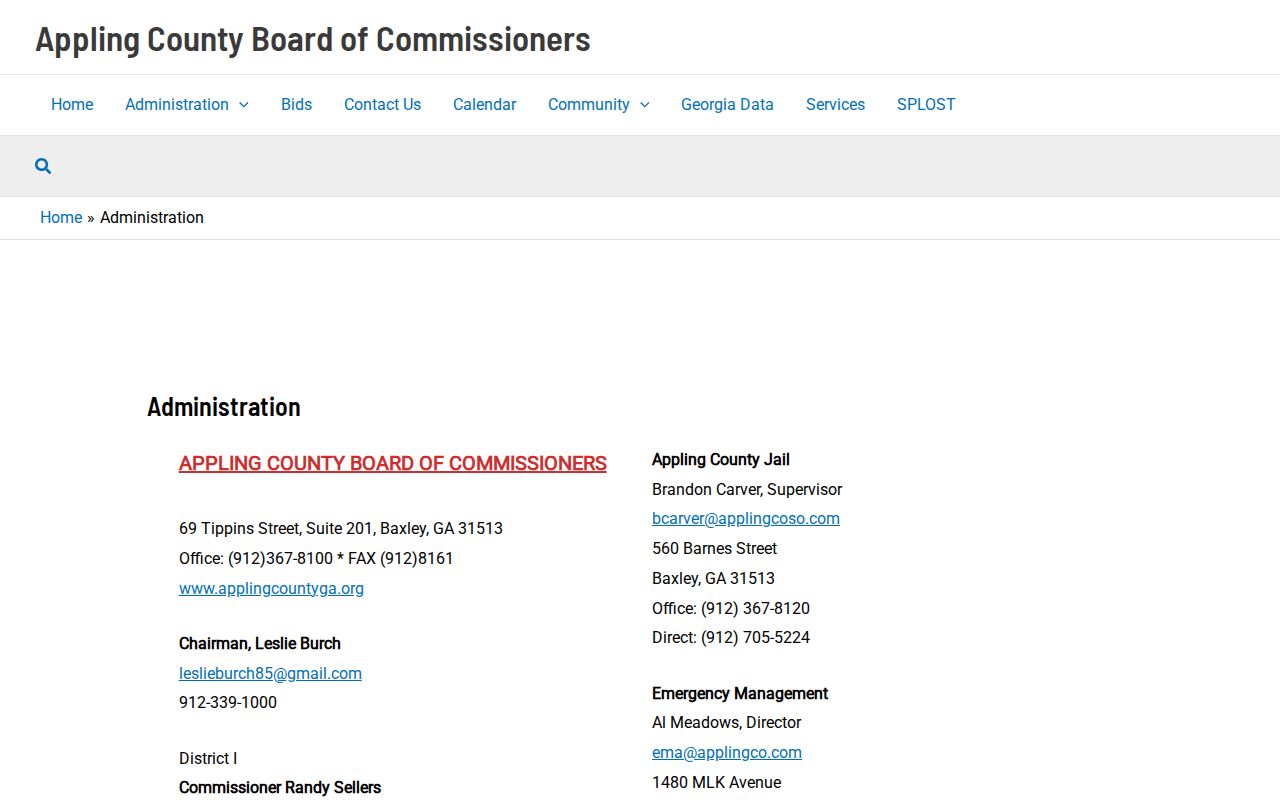
Use that separation as the routing rule: a booking does not prove a conviction, and a court disposition does not replace the officer's narrative.
Georgia Official Background Checks
The Georgia Bureau of Investigation's Georgia Crime Information Center is the central state repository. For self-review, GCIC says a person may obtain a Georgia history through many participating sheriff or police agencies or schedule an inspection at the GCIC lobby. The lobby at 3121 Panthersville Road in Decatur handles appointment-based record inspection and fingerprint services at 404-244-2639, option 1. Local agency requirements and charges vary.
Georgia Felon Search is a paid public name search, but it is narrower than a complete history. It requires first name, last name, date of birth, sex, and payment information, and returns possible Georgia felony-conviction matches. It omits misdemeanors, juvenile felony history, and restricted or sealed information. GBI warns that fingerprints, not a name result, establish exact identity.
The official GCIC system overview places criminal histories, fingerprint services, statistics, and registry functions within the state repository.
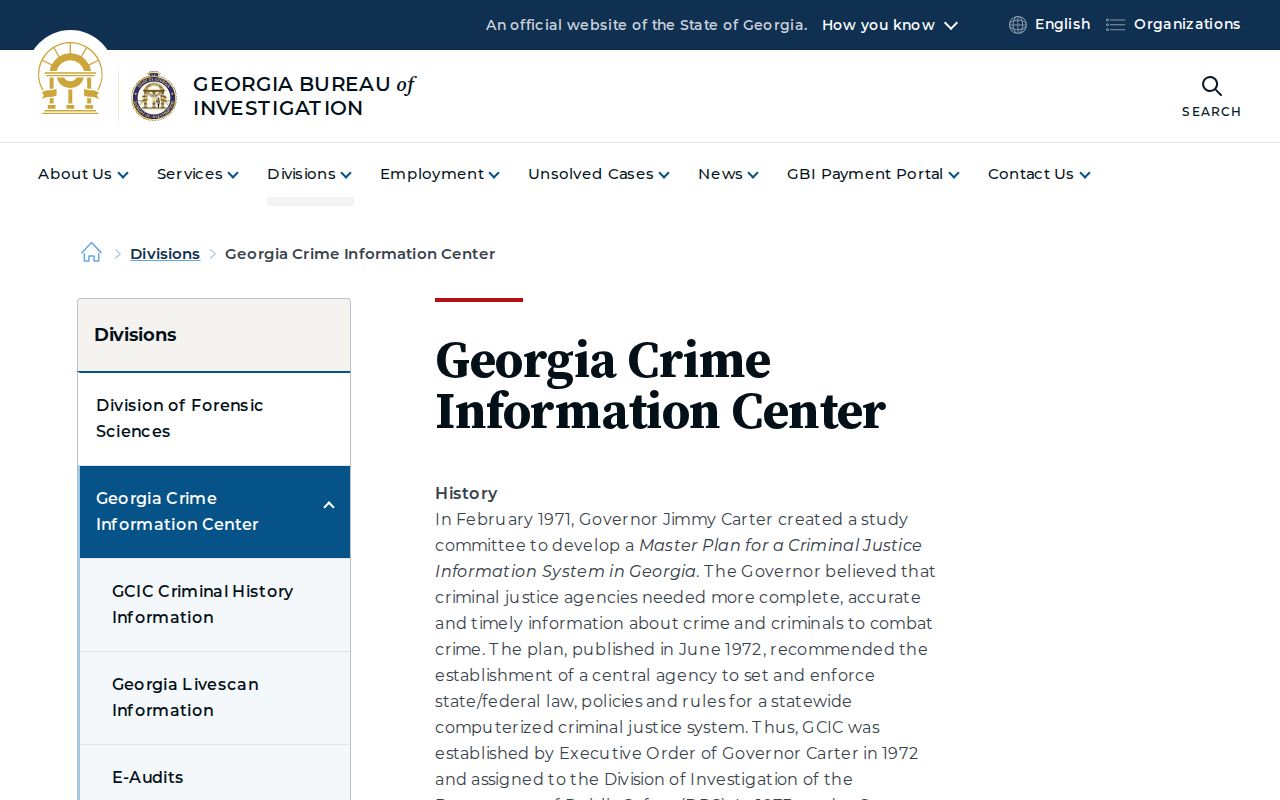
That state layer complements rather than replaces the Appling clerk, sheriff, jail, and municipal custodians.
Georgia Felon Search Is Not a Complete Appling Rap Sheet
A blank Felon Search result does not show that no arrest, misdemeanor, pending prosecution, or local court record exists. It means only that the supplied identifiers did not return a possible match within the product's Georgia felony-conviction scope. Conversely, a possible match should not be attributed to a person without comparing identifiers and, when identity truly matters, fingerprints.
| Search field | Requirement | Practical caution |
|---|---|---|
| First and last name | Required | Use legal spelling and consider known variants elsewhere |
| Date of birth | Required | A similar name without matching DOB is weak evidence |
| Sex | Required | Use the official field as presented |
| Payment card | Required | Verify the current displayed transaction price |
The official Georgia Felon Search explanation states the product's input requirements and limits.
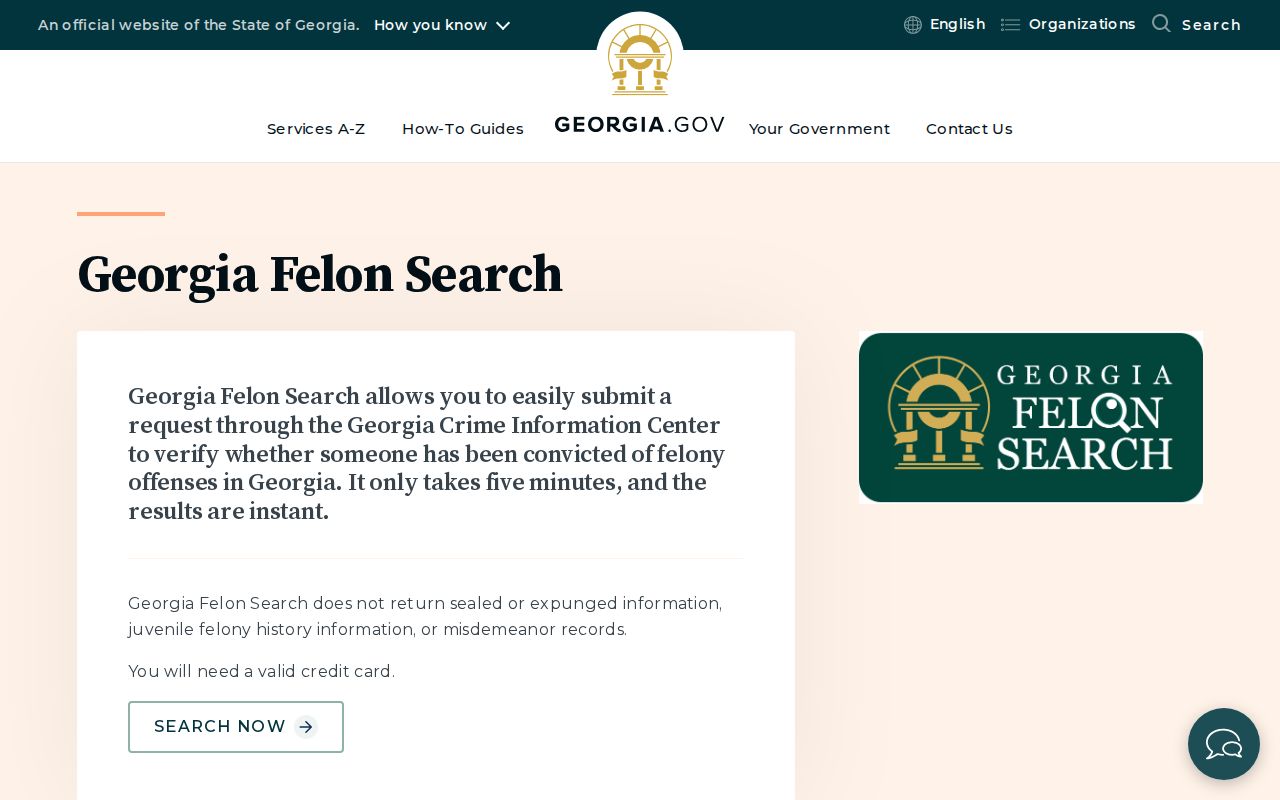
For a fuller view of your own Georgia record, use GCIC self-review; for the actual Appling outcome, compare the clerk's disposition.
Criminal Record Types
Criminal history is a chain of related records rather than one document. Knowing the vocabulary prevents a searcher from treating an early allegation as the final result.
- Incident report
- An agency narrative about an alleged event; it may exist without an arrest.
- Booking record
- Jail intake data, photograph, fingerprints, booking number, initial charges, and bond information; it proves custody, not guilt.
- Court case file
- The accusation or indictment, motions, docket events, plea or trial result, judgment, sentence, and disposition.
- GCIC criminal history
- Georgia arrest cycles, reported court outcomes, and eligible custodial information linked through repository reporting.
- Warrant record
- Information from an issuing court concerning an arrest or failure-to-appear basis, subject to sealing and investigative limits.
- Correctional or supervision record
- GDC prison information or DCS felony probation and parole information, distinct from county custody.
- Registry record
- Statutory information in the Georgia Sex Offender Registry, maintained centrally by GBI and updated through sheriffs.
The GBI criminal-history FAQ explains what the state repository collects and disseminates.
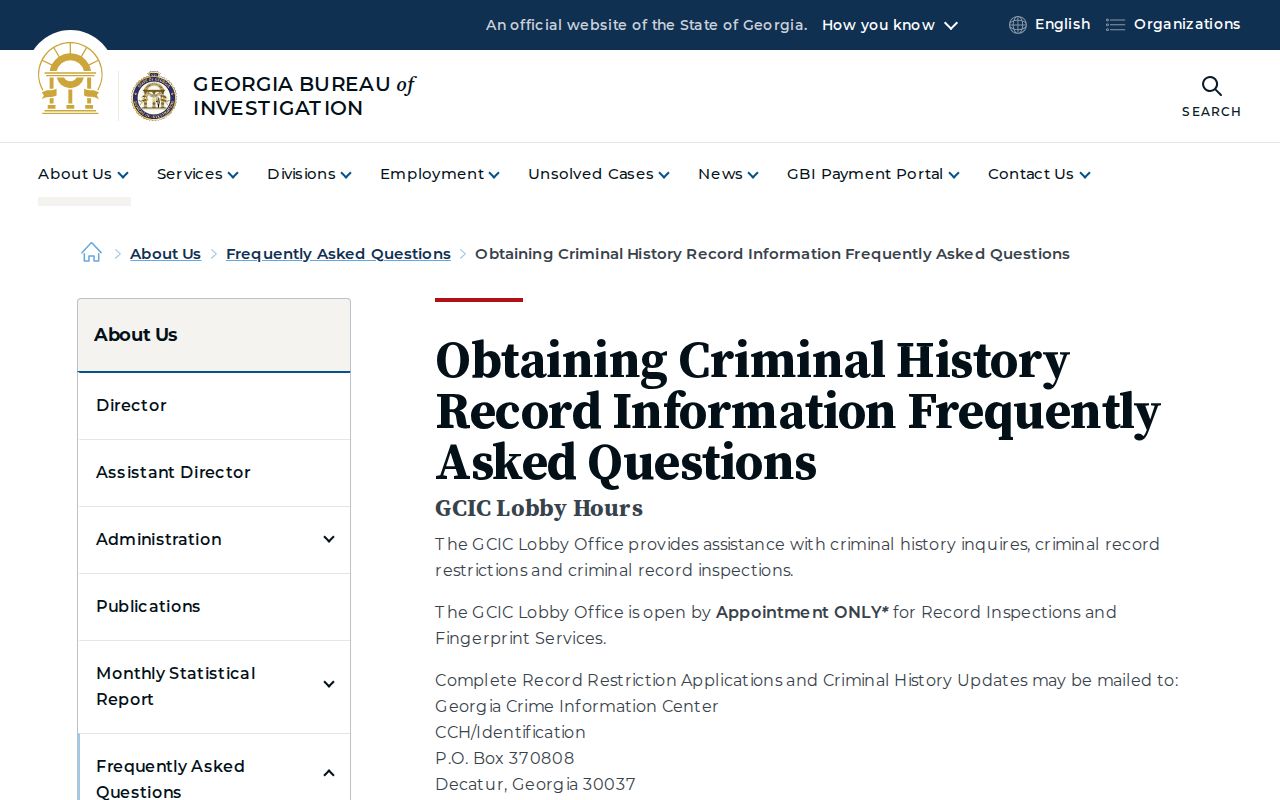
Its repository description helps show why an Appling court docket may contain details that a statewide history does not.
Barnes Street Booking Records Versus GDC Prison Records
Appling County Jail is a local facility at 560 Barnes Street, Suite B in Baxley. No official online county roster, booking blotter, local warrant portal, or sheriff mobile app was verified. The GDC page for Appling County Jail is only a facility-directory entry and does not provide the detailed information sheet available for state institutions. For recent county custody, contact the jail and confirm its current phone, counter procedure, and visitation or payment rules through an official directory before acting.
GDC Find an Offender applies after a person is sentenced or otherwise enters Georgia state custody. It may show a GDC number, offense and sentence fields, facility, status, and release or parole-related information. A missing GDC result can simply mean the person remains in county custody. Felony community supervision is handled separately by the Georgia Department of Community Supervision.
Do not substitute a commercial jail directory. Confirm a current Appling booking through the local jail, a state prisoner through GDC, and the filed case through the clerk.
Inside an Appling County Criminal Record
The fields depend on the source. GBI describes a Georgia history as including identifiers, arresting agency and date, arrest charges, judicial dispositions reported by courts or prosecutors, and qualifying custodial information. Public products suppress sensitive identifiers and omit juvenile, restricted, or sealed material. Court records add filings, docket dates, judge, attorneys, financial entries, and count-by-count outcomes that do not belong on a rap sheet.
| Name & Identifiers | Name, aliases, birth information, physical descriptors, and repository identifiers as lawfully displayed. |
|---|---|
| Arrest / Booking Data | Agency, arrest date, booking number, asserted charges, bond, and custody events. |
| Charges & Statutes | Each alleged count and its Georgia code reference; filed charges may differ from arrest labels. |
| Disposition | Dismissal, nolle prosequi, plea, acquittal, conviction, dead docket, or another count-specific outcome. |
| Sentence | Confinement, probation, fines, conditions, credit, or other terms in the judgment. |
| Custody / Supervision | County booking, GDC placement, or DCS supervision, depending on the system. |
Read a record in arrest cycles: one arrest can contain several charges, and each count needs its own disposition. A missing disposition is not a conviction. Obtain a certified final disposition from the Appling clerk when correcting an incomplete GCIC entry.
No Online Appling Warrant List: Use the Safe Fallback Chain
No official public Appling County warrant-search portal was found. A warrant can originate in Superior, State, Magistrate, or Baxley Municipal Court, and active or sealed material may not appear in a public list. If resolving your own possible warrant, contact the Appling County Sheriff and the issuing court directly rather than relying on a people-search site. Do not appear at an office without first asking how the agency handles warrant confirmation.
- Identify the court or agency from the citation, prior case number, notice, or report.
- Ask the sheriff at the Barnes Street office whether releasable warrant information can be confirmed and verify the current contact number through an official directory.
- Contact the clerk at 912-367-8126 for Superior or State Court case information; use the proper municipal channel for a Baxley citation.
- For a document request, ask for a specific existing public record under the Georgia Open Records Act rather than demanding an agency-created answer.
Juvenile matters, sealed warrants, victim data, and active investigative details may be withheld. A licensed Georgia attorney can advise on surrender, bond, and individual legal consequences.
Public Access Laws in Georgia
The Georgia Open Records Act governs many executive-branch records, while court files remain with their clerks and are also affected by judicial rules and sealing orders. A sheriff request should identify an existing report, date range, location, delivery format, and cost ceiling. Under O.C.G.A. § 50-18-71, an agency generally produces responsive records within three business days or gives a written response explaining availability, estimated cost, and the precise basis for withholding.
Key Georgia statutes:
O.C.G.A. § 50-18-70 establishes the presumption favoring inspection of public records.
O.C.G.A. § 50-18-71 addresses three-business-day responses, electronic access, estimates, and reasonable production costs.
O.C.G.A. § 50-18-72 permits exemptions and redaction for protected information.
O.C.G.A. § 35-3-34 controls dissemination of Georgia criminal-history information.
O.C.G.A. § 35-3-37 governs eligible restriction, sealing, prosecutor review, and appeal.
The Attorney General's official open-government FAQ explains response timing, costs, electronic records, and denials.
That guidance is the practical fallback when Appling has no specialized online request form.
The Three-Business-Day Rule for Appling Requests
Three business days is a response rule, not a promise that every file will arrive in three days. The custodian may produce the record, explain when it will be ready, estimate lawful costs, or cite the exact exemption supporting a denial or redaction. Agencies need not create a new report or answer questions. Ask for the existing initial incident report or public booking record and separate expensive media such as body-camera video, 911 audio, photographs, or CAD logs.
| Item | Published amount | Planning note |
|---|---|---|
| Electronic sheriff record | Not published locally | Request an estimate and set a cost ceiling |
| Staff search or retrieval | First 15 minutes free | Lowest-paid qualified employee thereafter |
| Certified court copy | Ask the clerk | Certification is a court service |
| Pre-2013 arresting-agency restriction step | Up to $50 | Applies where the older application route is required |
| GCIC restriction processing | $25 | After approval, using the required payment method |
A narrow request can state the date, location, agency, report number if known, desired electronic format, certification need, and a maximum cost. Baxley Police has a city form, but the sheriff had no verified standalone form or records portal at research time.
Sealed, Expunged, and Restricted Records
Georgia uses the term record restriction. Restriction limits ordinary public dissemination of qualifying charge information; it does not destroy the record or make it disappear from law-enforcement and judicial systems. Dismissal, acquittal, nolle prosequi, no bill, and some other nonconviction outcomes may qualify, while guilty dispositions generally require a different statutory route. Court sealing under O.C.G.A. § 35-3-37, First Offender Act relief, specified misdemeanor relief, and juvenile rules are related but distinct.
For an arrest before July 1, 2013, the applicant generally begins the three-section form with the arresting agency. For an arrest on or after that date, GBI instructs the person to contact the prosecuting attorney. In Appling, that can mean the Brunswick Judicial Circuit District Attorney for a felony or the State Court prosecutor for a misdemeanor. A prosecutor denial may be appealed in Superior Court within 30 days. Complete approved applications generally take GCIC two to three weeks to process.
The GBI restriction service page supplies the official form and repository instructions.
Before applying, review your history and obtain a certified disposition from the Appling clerk so missing or incorrect outcomes can be addressed first.
Restriction Routes Before and After July 1, 2013
The arrest date changes the starting office, which is why using an old generic instruction can waste time. The pre-2013 form begins with the applicant and arresting agency, continues to the prosecutor, and then reaches GCIC after approval. The newer route starts with the prosecutor because there is no arresting-agency application step. One older-route form covers one arrest date, although it may include multiple charges arising from that arrest.
The state's public record-restriction guide explains the current pre- and post-2013 routing.
The Georgia Courts self-help resource adds court-focused instructions and form roles.
After GCIC confirms completion, recheck both the repository result and the court portal. Restriction in GCIC does not automatically seal every court image, so ask the court whether a separate sealing order is needed.
Baxley's 2025 Police-Building Exchange Can Misroute a Request
June 2025 Baxley council minutes approved an intergovernmental facility exchange involving 2008 Martin Luther King Jr. Avenue and the former Police Department space at 560 Barnes Street, Suite C. That change matters to record access: an older directory or PDF may point to a counter that no longer handles police requests. Confirm the current Baxley Police address through baxley.org before visiting.
City police reports use Baxley's official Open Records Request form. It directs the requester to complete Sections 1 through 3, sign the form, and submit it, including by email to records@baxley.org. Available delivery choices include inspection, copy, mail, and email, with fees governed by O.C.G.A. § 50-18-71. A Baxley arrest may then create a separate booking record at Appling County Jail and, if prosecuted, a separate court case.
The statewide GBI services directory is useful when a local request leads to a GCIC, registry, or fingerprint question.
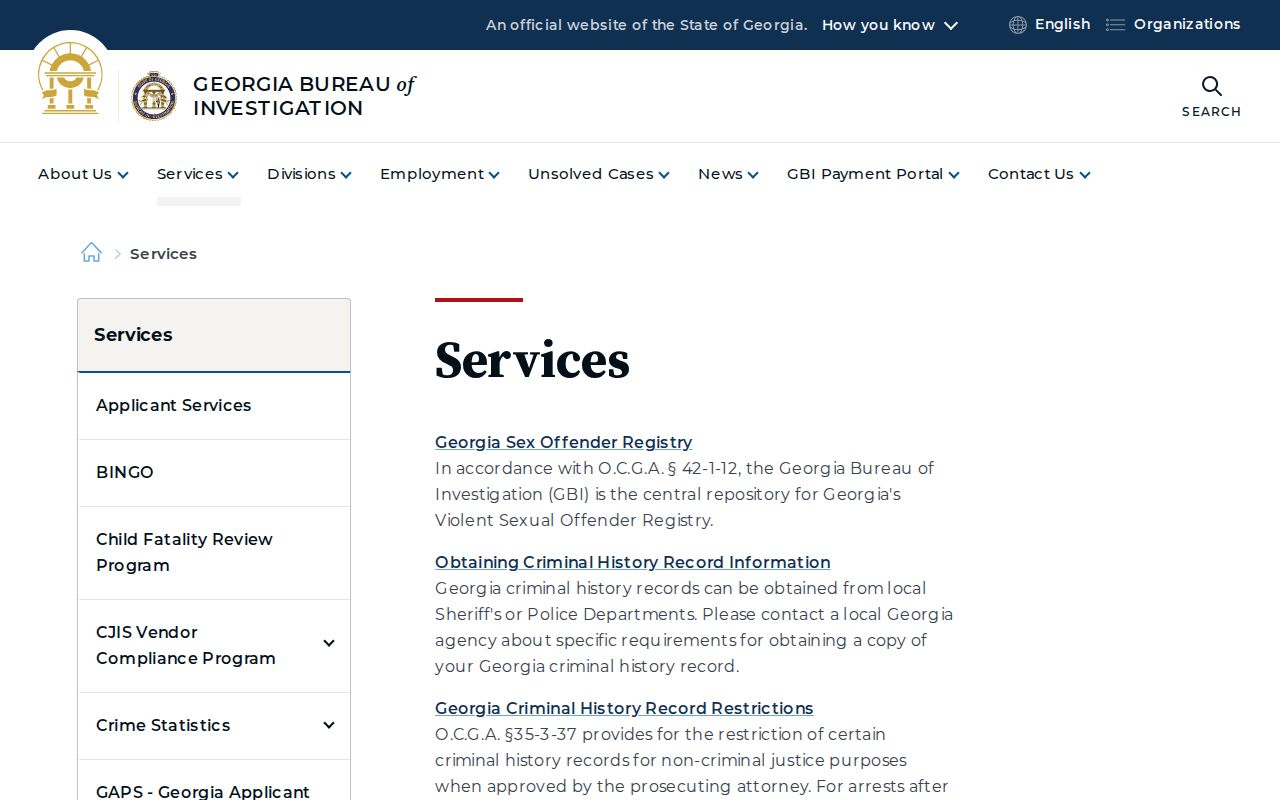
Keep the city, county, and state layers separate so the request reaches the office that actually holds the file.
Appling County Criminal Records by City
Appling County has exactly three incorporated municipalities, so the city guides cover the full list rather than a sample. Baxley is the county seat and principal records hub. Graham and Surrency have no verified standalone police-record portal, local booking feed, app, or online municipal docket. For either small municipality, first identify the agency on the report or citation, then route a sheriff matter to Barnes Street, a filed felony to Superior Court, a county misdemeanor to State Court, or a State Patrol report to Georgia DPS.
Baxley Criminal Records
4,942 residents in the 2020 Census · City reports use Baxley's signed open-records form; verify the police counter after the 2025 exchange.
Graham Criminal Records
263 residents in the 2020 Census · Identify the issuing agency first; county bookings and filed cases route through Baxley.
Surrency Criminal Records
Approximately 201 residents in the 2020 Census · No independent online records or jail portal was verified.